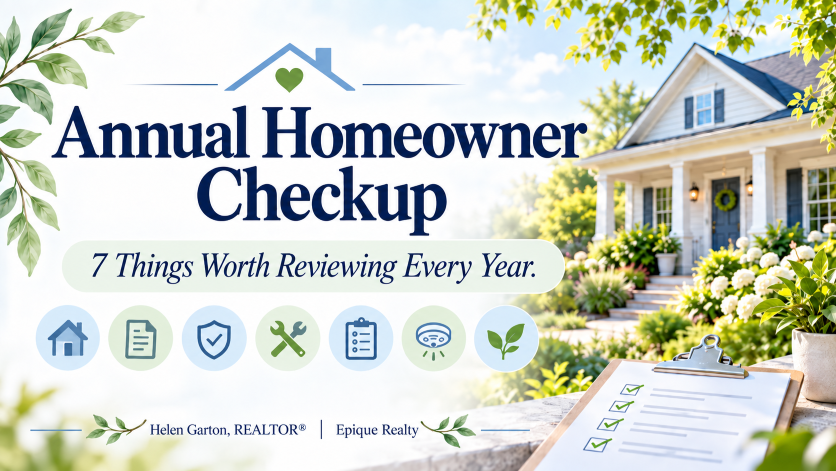
Your Annual Homeowner Checkup: 7 Things Worth Reviewing Every Year
Buying a home may be a transaction, but owning one is an ongoing responsibility.
Once the boxes are unpacked and the closing documents are filed away, it is easy to settle into everyday life and forget about some of the paperwork, records, insurance coverage, and maintenance information connected to your home.
That is why I recommend giving your home an annual homeowner checkup.
Think of it as a once-a-year opportunity to make sure your records are organized, your coverage still makes sense, and you know where to find important information if you ever need it.
Here are seven things worth reviewing.
1. Create or Update Your Home Inventory
If you had to make an insurance claim tomorrow, could you remember everything you own? Probably not—and neither could most of us.
A home inventory can be as simple as walking through each room with your phone and taking photos or video. Pay particular attention to higher-value items such as electronics, appliances, jewelry, artwork, furniture, collectibles, and tools.
For major purchases, consider keeping:
- Receipts
- Model and serial numbers
- Purchase dates
- Photos
- Warranty information
You do not need to create a museum-quality catalog of every fork and bath towel. The goal is simply to have enough information to document what you own if something happens.
2. Make Sure Important Records Are Stored Safely
Homeowners tend to accumulate an impressive amount of paperwork. Some of it can safely disappear into the recycling bin. Some of it cannot.
Consider keeping important home-related information together, including purchase and settlement documents, warranties, receipts for major improvements, contractor information, insurance policies, surveys, HOA documents, and records for major systems such as the roof, HVAC equipment, and water heater. Digital copies can also be helpful, particularly if the originals are stored in the home.
The important question is this: If you needed one of these documents six months from now, would you know where to find it? If the answer involves opening eleven drawers and muttering under your breath, it may be time to reorganize.
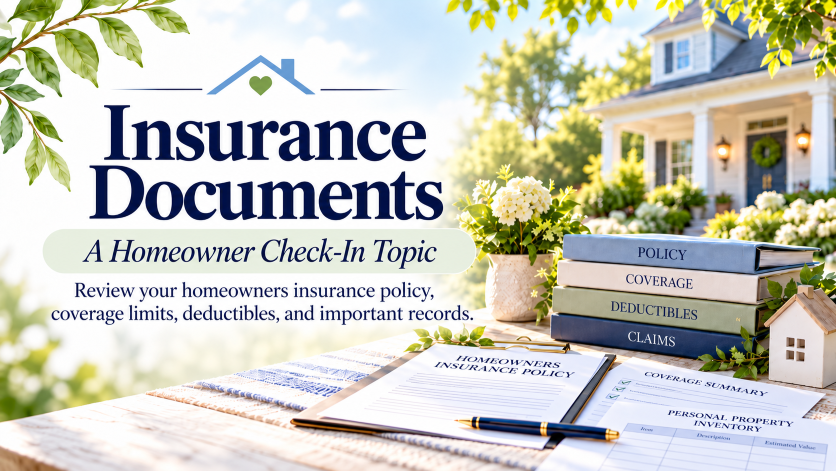
3. Review Your Homeowners Insurance
Your home—and what is inside it—can change considerably over time.
Maybe you renovated a kitchen, finished a basement, installed new flooring, purchased expensive furniture, added jewelry or artwork, or made other improvements since your policy was written.
That makes an annual conversation with your insurance professional worthwhile.
Ask whether your current coverage still reflects your home, belongings, and circumstances. You may also want to ask about deductibles, liability coverage, replacement-cost provisions, and whether certain high-value belongings require additional coverage.
This is especially important after a significant renovation or major purchase.
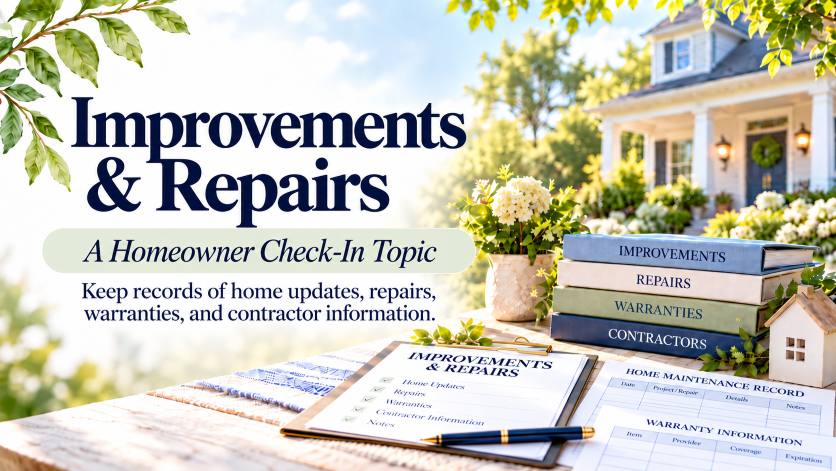
4. Keep a Record of Improvements and Repairs
That new roof you installed seven years ago? Seven years from now, you may not remember exactly when it was done—or who did it. Keep a simple running record of major improvements and repairs such as:
- Roof replacement
- HVAC replacement
- Water heater installation
- Windows and doors
- Plumbing or electrical work
- Kitchen and bathroom renovations
- Flooring
- Exterior improvements
Include the date, contractor, approximate cost, and warranty information when possible.
These records are useful while you own the home and can also be helpful when you eventually decide to sell.
5. Review Important Legal and Estate Documents
A home is often one of a household's largest assets, so changes in homeownership can sometimes be a good reason to review broader legal and estate documents. For example, a purchase, sale, marriage, divorce, death, inheritance, or other major life change may affect how property fits into an estate plan.
That does not mean every homeowner needs to rewrite legal documents every year.
It does mean that periodically asking, “Are these still current?” is sensible.
Questions involving wills, trusts, powers of attorney, deeds, or estate planning should be discussed with a qualified attorney who can advise you based on your individual circumstances.
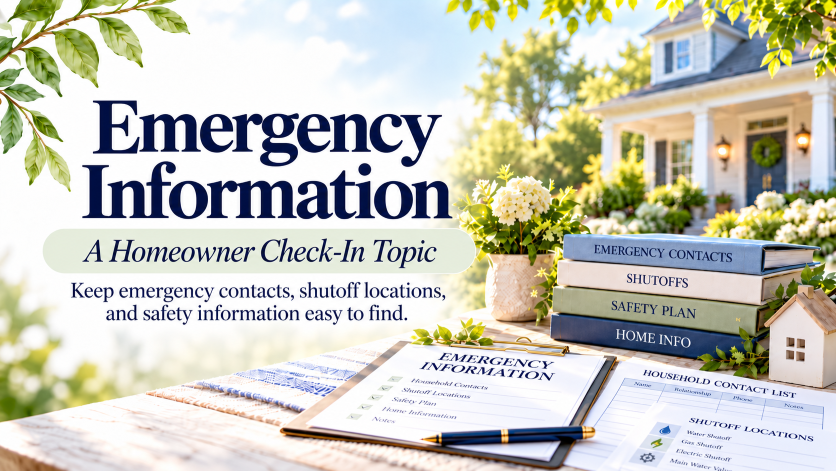
6. Check Your Emergency Information
This one is easy to overlook.
Make sure you know where your home's important shutoffs and controls are located.
That includes things such as:
- Main water shutoff
- Electrical panel
- Gas shutoff, if applicable
- HVAC emergency switch
- Fire extinguishers
- Smoke and carbon-monoxide detectors
It is also worth making sure everyone in the household knows this information—not just the person who normally handles home maintenance. A burst pipe at 2:00 in the morning is a terrible time to begin a scavenger hunt for the water shutoff.

7. Take a Fresh Look at Whether Your Home Still Fits Your Life
This may be the most important part of the annual checkup, particularly as we approach retirement. Homes that worked beautifully for us ten or twenty years ago do not automatically remain the right homes forever.
Once a year, consider asking yourself:
Is this home still working for the life I want now—and the life I expect in the next several years?
That does not necessarily mean moving. It may mean making improvements, simplifying maintenance, improving accessibility, reorganizing unused space, or beginning to think about future options.
For homeowners approaching retirement, this can also be a good time to consider questions such as:
- How much of the house are we actually using?
- Is the maintenance becoming more than we want?
- Are stairs likely to become an issue?
- Are our housing costs comfortable for retirement?
- Do we want to remain here long term?
- Would another type of home or community better support the lifestyle we want?
Those are planning questions—not moving questions. And there is an important difference.
A Little Organization Now Can Save a Lot of Stress Later
Most of these tasks are not urgent. That is exactly why they are so easy to postpone.
Setting aside an hour or two once a year to review your home inventory, insurance, records, legal documents, maintenance history, and future housing needs can make life considerably easier when something unexpected happens.
And if you eventually decide that your home no longer fits the next chapter of your life, having good records and a clear understanding of your property puts you in a much better position to make thoughtful decisions.
Owning a home is about more than maintaining the house. It is also about making sure the house continues to support the life you want to live.
For my one page downloadable guide "Annual Homeowner Checkup", go to my Resources section under Guides and Downloads.